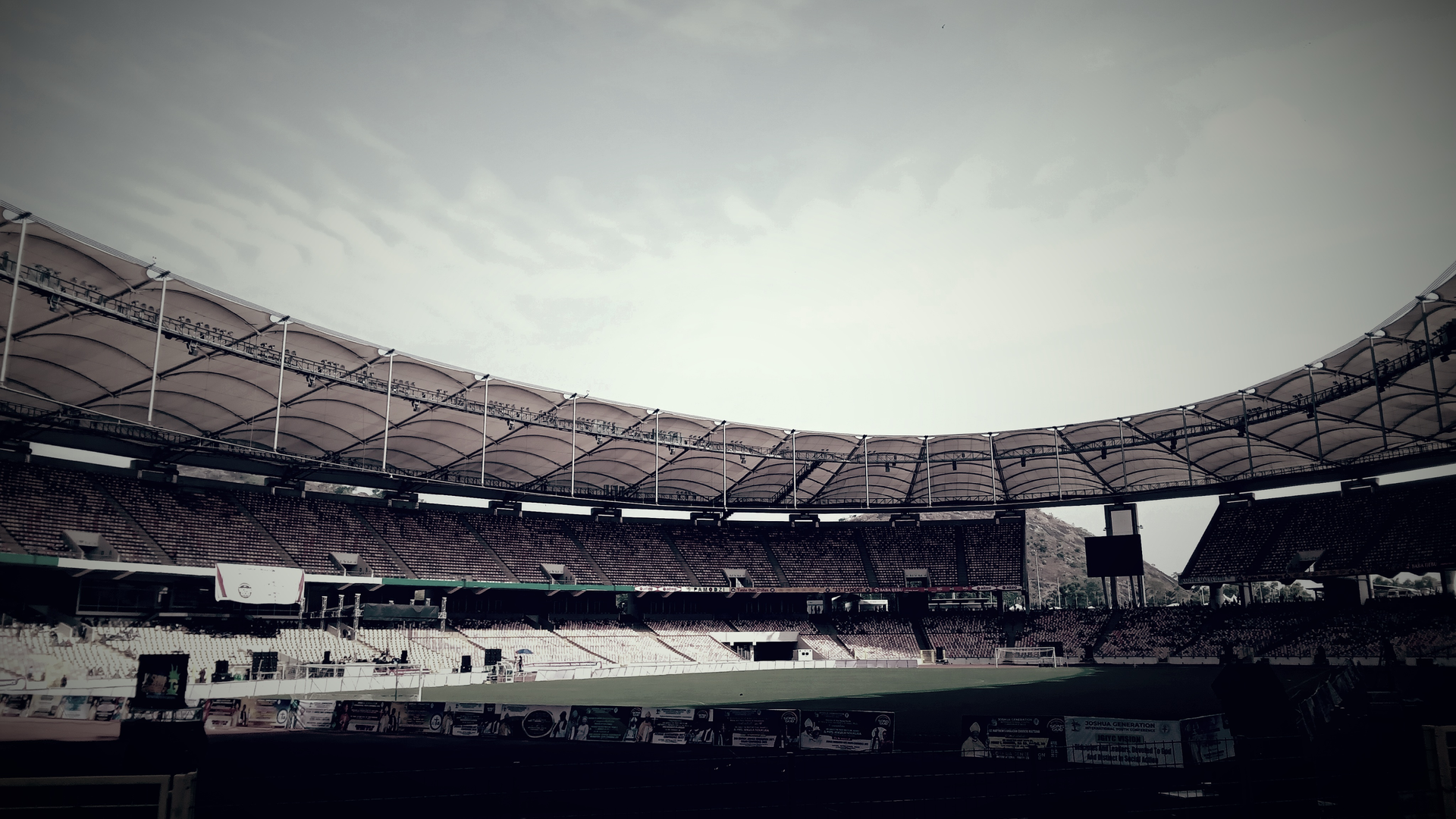
MKO Abiola National Stadium
Stadium Snapshot
- Address Airport Road, Abuja
- Capacity 60,491
- Surface Natural grass
- Built 2003
- Renovated 2024
- Record attendance 60,000 (2003 AFCON)
- Architect Schlaich Bergermann
- Owner Federal Govt of Nigeria
Abuja, Nigeria
Airport Road, Package B, Abuja Municipal, FCT 900102
Find Your Best View
Home End (Block A1–A4)
Best atmosphere — organised supporters, flares at CAF and Super Eagles matches. Behind the goal.
Main Stand (Covered, East)
Best view — covered, midpoint of the pitch, cushioned seats. Includes VIP sections. TV-camera side.
Family Block (West Stand)
Mixed crowd, quieter, recommended with children. Covered. No flares policy enforced.
Away End (Block D)
Segregation zone for travelling fans. Separate entry (Gate D), separate concessions, police escort.
How to get there
By car
15–25 min from city centre
By car
15–25 min from city centre
Typical Fare
Indicative pricing
The stadium sits on Airport Road (A2), 15 km south of Abuja city centre. From the city the drive takes 15 minutes on a clear day, 25–40 minutes on match-day traffic. Signage is clear from Nnamdi Azikiwe International Airport (7 km away).
- Stadium has 2,500 parking bays split across north and south car parks
- North car park is closer to home-fan entrances (Blocks A–F)
- Arrive 2 hours before kickoff on Super Eagles match-days — the access road backs up
- Uber and Bolt work inside Abuja FCT but many drivers will not go near the stadium on match-day; book return before you leave
By taxi / ride-hail
Bolt or Uber from anywhere in Abuja
By taxi / ride-hail
Bolt or Uber from anywhere in Abuja
Typical Fare
Indicative pricing
Bolt is slightly cheaper than Uber in Abuja and has more drivers near the stadium post-match. Request rides from the designated pickup point outside Gate C rather than trying to flag from within the car park.
- Cash or card both work; apps support both in Abuja
- Budget ₦500–1,500 surge on match-day returns
- Kabu Kabu (informal taxis) cost less but no price transparency — agree fare before getting in
By bus
Limited public transport
By bus
Limited public transport
Typical Fare
Indicative pricing
Abuja does not have a rail link to the stadium. Minibus services (keke and painted buses) run from the Berger bus park on match-days for ₦300–500, but they are crowded and slow. Hire or ride-hail is strongly recommended for international visitors.
- From Berger bus park: take any Kubwa or Karu bus marked 'Stadium'
- From Wuse II: no direct bus — switch at Area 1
From the airport
7 km · 10 minutes
From the airport
7 km · 10 minutes
Nnamdi Azikiwe International Airport is 7 km from the stadium — easily the closest African national-team stadium to an international airport. Taxis are readily available at arrivals. Bolt and Uber work at the airport.
- Pre-book a driver with your hotel if you are arriving match-day morning
- Airport → stadium: Bolt ₦3,000–4,500 · airport taxi ₦6,000–8,000
Where to buy tickets
NFF Ticketing + StarLeague app
The Nigeria Football Federation runs all Super Eagles ticketing through the StarLeague app and the nff.com.ng portal. NPFL match tickets (for club-hosted fixtures) go through the NPFL app.
Check current fixturesWhitelisted secondary market
When the official portal sells out, these are the only resellers we recommend.
Match-Day Timeline
Stadium gates open
Early arrival recommended for Super Eagles matches. Body search at every gate.
Kickoff −3hWarm-up begins
Limited concessions open; full food service from −1h
−2hTeam arrival
Watch from outside the players' tunnel if you have a tunnel-access pass
−90 minStadium announcement
National anthem rehearsal, pre-match entertainment
−30 minMatch begins
KickoffHalf-time concessions
Queues peak at 45–55 min; plan accordingly
HTControlled exit
Home-end blocks released first, away fans held 30 min for safety
FT +15 minSafety & fan tips
Abuja match-days are generally peaceful and security is visible. The highest-risk periods are 2 hours before and 30 minutes after kickoff, and the sharpest increase in pickpockets is at the car-park exits. Emergency medical service is on-site at every match (Red Cross + private ambulance).
- Visible security at every gate. Body search includes bag + outer clothing. Comply quickly and you will be through in 2 minutes.
- Keep cash in two separate pockets. Pickpockets target the turnstile crush and the post-match exit gates.
- Avoid wearing the away team's colours in home blocks. The Nigerian Police Force takes this seriously and will move you for your own safety.
- On-site Red Cross at Gate B. Private ambulance at Gate D. First aid at every stairwell.
- Do not photograph security personnel. Phone + camera use is fine elsewhere but prohibited at the checkpoint line.
Accessibility
- Wheelchair-accessible viewing platform at Block E (south-east), capacity 120
- Elevator to main stand VIP level (Block E west) — accessible entry from Gate VIP
- Hearing loop active in Main Stand VIP; request at Block E gate
- Accessible parking at North Car Park Bay 1–15 — reserved, book via NFF portal
- Accessible washrooms at every stairwell on the concourse
- Companion ticket free — apply to NFF 7+ days in advance with medical documentation
Where to stay and eat nearby
Hotels — walkable
Abuja's five-star flagship. Super Eagles squad historically stays here pre-match.
Book on HiltonBusiness-grade hotel with reliable airport shuttle and gym.
Book on MarriottClosest mid-range option to the stadium. Clean, safe, simple.
Check Booking.comPre-match bars
Nigerian grills + big-screen football. Popular with NFF officials pre-match.
Mixed crowd, TV coverage, outdoor seating. Good for families pre-kickoff.
Italian wine bar, chill atmosphere — not a rowdy football bar.
Post-match food
Opens 8pm — typical post-Super-Eagles destination. Loud, Afrobeats heavy.
Suya and grilled chicken; queue until midnight on match-days.
Nigerian fine dining. Safe pick for a quiet post-match dinner.
Historical Significance
MKO Abiola National Stadium opened in 2003 for the All-Africa Games, and was the main venue for the 2003 CAF Champions League final where Enyimba beat Ismaily. Originally named Abuja National Stadium, it was renamed in 2019 after Moshood Kashimawo Olawale Abiola, the presumed winner of the annulled 1993 Nigerian presidential election. The 2024 reopening followed a ₦15 billion refurbishment — new pitch, renovated changing rooms, full concourse rewire, and upgraded floodlighting.
Built
2003
Renovated
2024
Surface
Natural grass
Record
60,000
Notable matches
CAF Champions League final second leg. Enyimba's first continental title and first for any Nigerian club.
All-Africa Games football final — stadium inauguration match. Sold out, 60,000 attendance (the stadium record).
2026 World Cup qualifier — first match back after the ₦15bn refurbishment reopening.
High-profile pre-AFCON friendly. Osimhen and Jordan Ayew goals; a Rangers-of-Enugu cameraman captured the viral celebration image.
Frequently Asked Questions
What is the capacity of MKO Abiola National Stadium?
Where is MKO Abiola National Stadium located?
How much are Super Eagles tickets at the stadium?
Is there parking at the stadium?
What's the best seat at MKO Abiola Stadium?
When was MKO Abiola National Stadium built?
How do I get to the stadium without a car?
Who owns MKO Abiola National Stadium?
Related Pages
Last updated 2026-04-21 · written by Amara Okafor. · Reviewed by Ọmọlàgbà Olúwáyẹmí